


Power Availability Is Redefining Data Center Growth
For years, data center site selection prioritized proximity to major metropolitan areas—driven by access to customers, talent, and network hubs. Today, power availability has overtaken all other considerations and now sits at the top of the decision hierarchy.
Industry forums such as Data Center World consistently reinforce this shift. Reliable, scalable power is no longer one factor among many—it has become the primary bottleneck determining where, when, and whether data centers can be built.
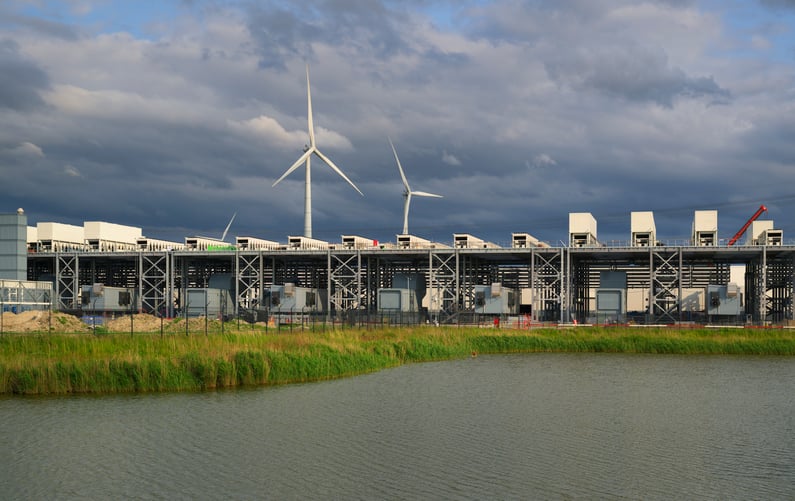
AI Is Reshaping Power Requirements
The rapid expansion of AI workloads is accelerating this transition. Generative AI and large-scale model training demand orders of magnitude more power than traditional enterprise computing, driving the rise of hyperscale and campus-style developments.
In 2024 alone, more than 35 GW-scale projects were announced globally, alongside multiple developments nearing 1 GW. These facilities—often described as “AI factories”—reflect the industrial-scale nature of AI compute and energy demand.
With most major metro markets lacking spare gigawatt-level capacity, AI-driven projects are increasingly shifting to non-traditional locations such as the Midwest, the Southeast, cooler northern regions, and energy-rich areas like West Texas, North Dakota, and Alberta. These regions combine fiber access, lower land costs, and—most critically—available power.
Grid Constraints and the Rise of Onsite Power
Despite growing demand, grid access remains constrained. In many regions, interconnection queues now stretch from 18 months to over four years, driven by surging requests, aging infrastructure, and regulatory complexity.
This creates a structural mismatch: data centers can be built in two to three years, while grid upgrades often take four to eight years. As a result, sites with existing interconnection rights or favorable queue positions have become highly valuable.
To mitigate these risks, developers are increasingly adopting onsite, behind-the-meter, and off-grid power solutions—sourcing energy directly from colocated generation such as natural gas or renewables, rather than relying solely on the grid.
Bring Your Own Power (BYOP)
This shift has fueled the rise of Bring Your Own Power (BYOP). For AI-focused projects, controlling power supply now means controlling project timelines.
Developers that can secure independent power gain faster execution, reduced interconnection risk, and stronger project bankability—making BYOP a competitive necessity rather than a niche strategy.
Demand Growth Goes Beyond AI Alone
While AI dominates headlines, traditional enterprise workloads—including storage, transaction processing, and file sharing—still account for the majority of total data center power demand. Continued cloud adoption supports steady growth across hyperscale, colocation, and enterprise environments.
That said, AI remains the fastest-growing demand segment, expected to drive most incremental power growth through training and inference. Hyperscalers are projected to generate roughly 60% of industry growth, with colocation providers playing a key role in scaling capacity.
At the same time, facility sizes are expanding, with campuses above 200 MW becoming increasingly common to support high-density compute and ultrafast interconnectivity.
Location Still Matters—But Power Comes First
Location continues to influence construction costs, tax incentives, workforce access, fiber connectivity, water availability, and geopolitical risk. However, power availability now outweighs nearly all other siting factors.
As latency constraints ease for many AI workloads, operators have greater flexibility to prioritize energy cost, reliability, and sustainability over proximity to end users.
Breaking Through the Barriers to Growth
Power constraints increasingly intersect with supply chain delays, community concerns, and sustainability pressures. Long lead times for generators, cooling systems, and electrical equipment are reshaping procurement strategies and accelerating partnerships across the ecosystem.
Community engagement has also become critical, as local stakeholders scrutinize grid upgrade costs, energy affordability, water usage, and environmental impact. Successful projects now depend on early, transparent collaboration with utilities, regulators, and host communities.
A Power-First Future for Data Centers
The data center industry is entering a decisive phase. Global demand for computing continues to surge, but access to power will ultimately define the pace and geography of growth.
Power availability is no longer a technical detail—it is a strategic differentiator. Operators that can secure scalable energy, manage grid risk, and align growth with sustainability and community expectations will lead the next wave of data center expansion.
In the AI era, the future of data centers will be determined not by where demand exists—but by where power can be delivered, reliably and at scale.
Discover More.
Join us as we take you through every step of the development of our state-of-the-art hyperscale data center in this blog. We loves to talk about what we do. Feel free to chat with our sales experts about data center, managed colocation, and connectivity.


Content is protected by copyright law and is owned by Daou Technology Inc
It is prohibited to modify or commercially use this content without prior consent.
Featured images via gettyimages.
References
