


Data Center Physical Security
A practical look at layered security and access control, from the perimeter to the rack
|
TL;DR
|

What Is Physical Security?
Physical security is everything that keeps unauthorized people away from a facility, its spaces and the equipment inside, and protects that equipment from theft or damage. If physical access isn't controlled, firewalls and encryption can only do so much. According to IBM and the Ponemon Institute, physical security compromises were behind 10% of data breaches in 2022, costing an average of $3.96 million each [1].
How Is Physical Security Designed?
Good physical security doesn't rely on one strong door. It's built in layers, so if one layer is breached, the next one stops the intruder [2].
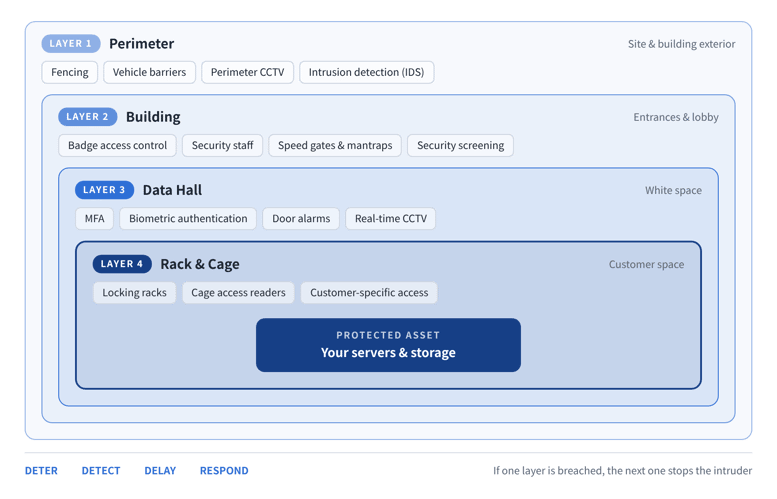
The outer layers cover large areas and focus on deterring and detecting threats. The inner layers protect smaller spaces with stronger authentication. The closer you get to customer equipment, the more credentials are required and the more tightly access is restricted.
Key Physical Security Controls
Most data centers rely on five core controls.
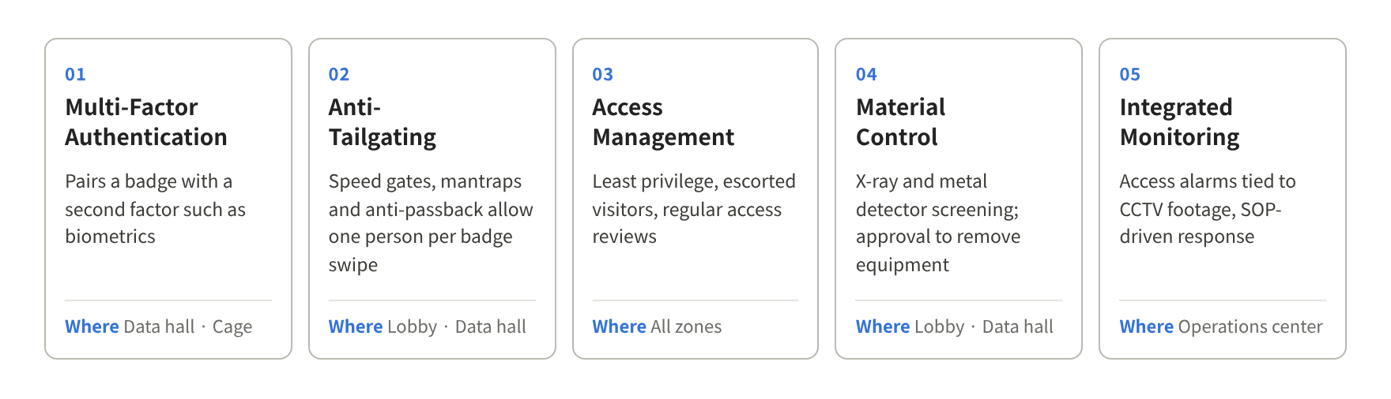
Multi-factor authentication (MFA) pairs an access badge with a second factor such as biometrics, so a borrowed or lost badge isn't enough to get in.
Anti-tailgating measures, including speed gates, mantraps and anti-passback, make sure only one person gets through per badge swipe.
Access management follows the principle of least privilege. People can only enter the zones they need, visitors are escorted at all times, and access rights are reviewed regularly.
Material control means incoming items are screened with X-ray scanners and walk-through metal detectors, and any equipment or media leaving the site needs approval.
Integrated monitoring brings access control alarms and CCTV footage together in the operations center, where staff respond according to standard operating procedures.
What Do Certifications and Regulations Require?
In Korea, the ISMS-P certification reviews secure area designation, access control and the handling of devices brought in or out. ISO/IEC 27001 covers physical controls as a dedicated area, and global providers also point to SOC 2 and PCI DSS to show their physical security standards [1]. Financial institutions in Korea face an additional layer of requirements under the Electronic Financial Supervisory Regulations, which call for physical safeguards such as data center access control and video surveillance.
What to Look for in a Data Center
When you're evaluating a provider, ask these five questions:
• Is access controlled at multiple stages, from the building entrance all the way to the rack?
• Is MFA required to enter the data hall and cages?
• Are physical anti-tailgating measures, such as speed gates, in place?
• Is there a screening and approval process for equipment coming in and going out?
• Is the site under 24/7 video surveillance with security staff on site?
How DAOU Data Center Keeps Your Infrastructure Secure
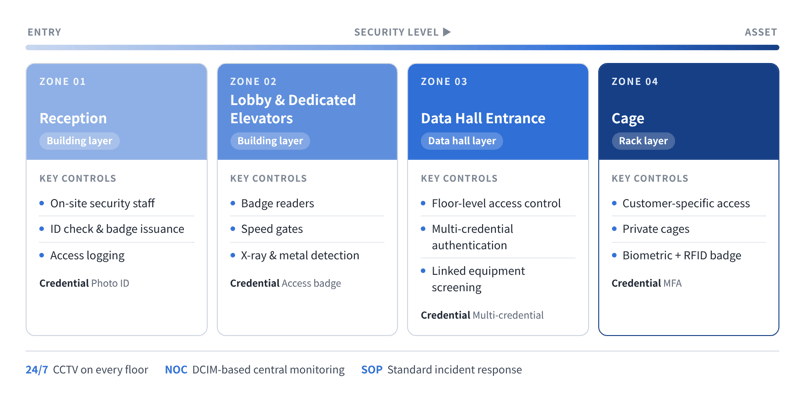
DAOU Data Center puts the layered security model into practice with four security zones.
Discover More.
Physical security works best when layered controls, monitoring and day-to-day operations work together. With 40 years of experience running IT infrastructure, Daou Technology operates a comprehensive security framework across its data center. Looking for a reliable home for your infrastructure? Get in touch with DAOU Data Center.


Content is protected by copyright law and is owned by Daou Technology Inc
It is prohibited to modify or commercially use this content without prior consent.
Featured images via gettyimages.
References
1. "The Physical Aspects of Data Center Security," CoreSite — IBM Security, Cost of a Data Breach Report (2022)
2. "Data Center Physical Security: The Complete Guide," ENCOR Advisors, 2025
